Description
Masking Worksheet Free Download
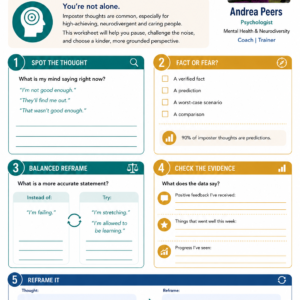
This free Masking Worksheet is designed to help you explore when, where and why you may mask parts of yourself. Masking can sometimes become such an automatic response that we don’t even realise we’re doing it.
Masking Worksheet Free Download is a practical psychology-based resource created to help you better understand masking, recognise when it happens and explore ways to feel more comfortable being your authentic self.
Many people adapt their behaviour to fit into different environments. While this can sometimes be helpful, masking becomes exhausting when you feel you must constantly hide your thoughts, emotions, personality or natural ways of communicating. Over time, this can lead to stress, anxiety, burnout, low self-esteem and emotional exhaustion.
Masking is commonly discussed in relation to neurodivergent individuals, including autistic people and people with ADHD. However, many people mask for different reasons. You may hide your emotions to avoid judgement, pretend to feel confident when you’re struggling, or change your behaviour to meet the expectations of others. This worksheet is designed to help anyone who feels they spend significant time hiding parts of themselves.
The Masking Worksheet Free Download guides you through a series of reflective exercises that help you identify your own masking behaviours without judgement. Rather than encouraging you to stop masking altogether, it helps you become more aware of when masking is useful, when it may be affecting your wellbeing, and how you can make choices that better support your mental health.
Inside this worksheet you’ll explore:
- What masking means
- Situations where you notice yourself masking
- How masking affects your energy and wellbeing
- Common triggers for masking
- The emotional and physical impact of masking
- Small, practical steps towards feeling more authentic
- Self-compassion and self-awareness strategies
This worksheet is suitable for adults, young people, professionals, students, parents and anyone interested in understanding themselves better. It can also be useful for individuals awaiting or exploring a neurodiversity assessment, although it is not a diagnostic tool.
The activities are straightforward, practical and designed to be completed at your own pace. Many people choose to revisit the worksheet over time as their understanding grows and circumstances change.
Created by psychologist Andrea Peers, this resource combines psychological knowledge with practical coaching techniques that encourage reflection rather than judgement. The aim is not to change who you are, but to help you understand yourself better and make choices that protect your wellbeing.
Whether you are exploring masking for the first time or looking for practical ways to reduce the emotional load of constantly adapting to others, this Masking Worksheet Free Download provides a supportive starting point.
Download your free copy today and begin understanding yourself with greater clarity, confidence and self-compassion.
Frequently Asked Questions
What is masking?
Masking is the process of changing or hiding aspects of your behaviour, personality or emotions to fit in, avoid judgement or meet other people’s expectations.
Who is this worksheet for?
Anyone who feels they hide parts of themselves to fit in, including neurodivergent and neurotypical individuals.
Is this a diagnostic tool?
No. This worksheet is designed to encourage self-reflection and increase awareness. It is not intended to diagnose autism, ADHD or any other condition.
How long does it take?
Most people complete the worksheet in around 10–20 minutes.
Can I print it?
Yes. The worksheet is designed for printing.
Please note: This worksheet is designed for educational and coaching purposes. It is not a substitute for psychological therapy, counselling, medical advice or professional mental health treatment.